
A tick bite that makes you allergic to red meat might sound like a fallacy, but it’s a growing fact across the southern and midwestern parts of the United States (with a bull’s eye on Kentucky). In fact, it’s a reality experienced by some of our friends’ families, especially those who love the outdoors.
Meet the Culprit
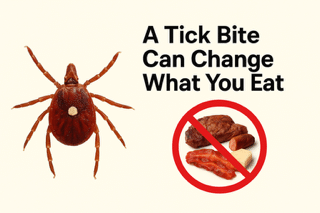 The Lone Star tick (the one with the white dot on its back) is an aggressive species found primarily in the South and Midwest. With warming temperatures and rising host populations like deer, its presence continues to expand.
A Lone Star tick bite can transmit galactose-α-1,3-galactose (alpha-gal), a carbohydrate found in mammalian meat (beef, pork, lamb, venison, or wild game like deer and squirrel). For some people, this results in the immune system becoming sensitized to alpha-gal, causing allergic reactions to subsequent consumption of red meat or mammalian products such as gelatin, lard, or dairy. This is the origin of Alpha-Gal Syndrome (AGS).
Alpha-Gal Syndrome: The Hidden Food Allergy
Like many food allergies, AGS doesn’t cause the same reactions or severity level in those affected. Symptoms can range from hives to severe reactions that can appear suddenly — even after years of eating red meat (or meat-based foods) without issue.
Symptoms can be immediate or begin three to six hours after eating, making it harder to trace. Reactions range from hives to life-threatening anaphylaxis. About 20 years ago, I saw a food allergy male patient with sudden anaphylaxis to beef. At the time, a beef allergy was rare, and Alpha-Gal was not yet recognized. Looking back, a tick bite may have been the cause.
Diagnosis and Management
For outdoor enthusiasts and those in professions like farming or forestry, which require being in tall grasses or wooded areas, awareness of AGS should be top of mind, especially from spring through fall. (Yes, ticks are still thriving in September!)
There’s no known treatment for AGS. Instead, those with the condition need to focus on dietary changes that remove the alpha-gal sugar from the diet, strict avoidance of red meat and mammalian byproducts, careful label reading, and carrying antihistamines or epinephrine for those at risk of anaphylaxis. Keeping a food diary of reactions post meals along with blood tests are key to diagnosis.
Foods to Avoid Beyond Bacon and Steak
Managing AGS means avoiding more than just bacon and steak. Other food and food ingredients that should be avoided include:
- Beef, pork, lamb, venison, and related products like broths and stocks
- Products made with lard, tallow, or suet
- Gelatin (in gummies, marshmallows, desserts, and some supplements)
- Dairy (milk, cream, butter, cheese, ice cream — tolerance varies)
- Processed foods with hidden mammalian ingredients
- Certain medications, vaccines, or medical products with gelatin or animal-derived capsules
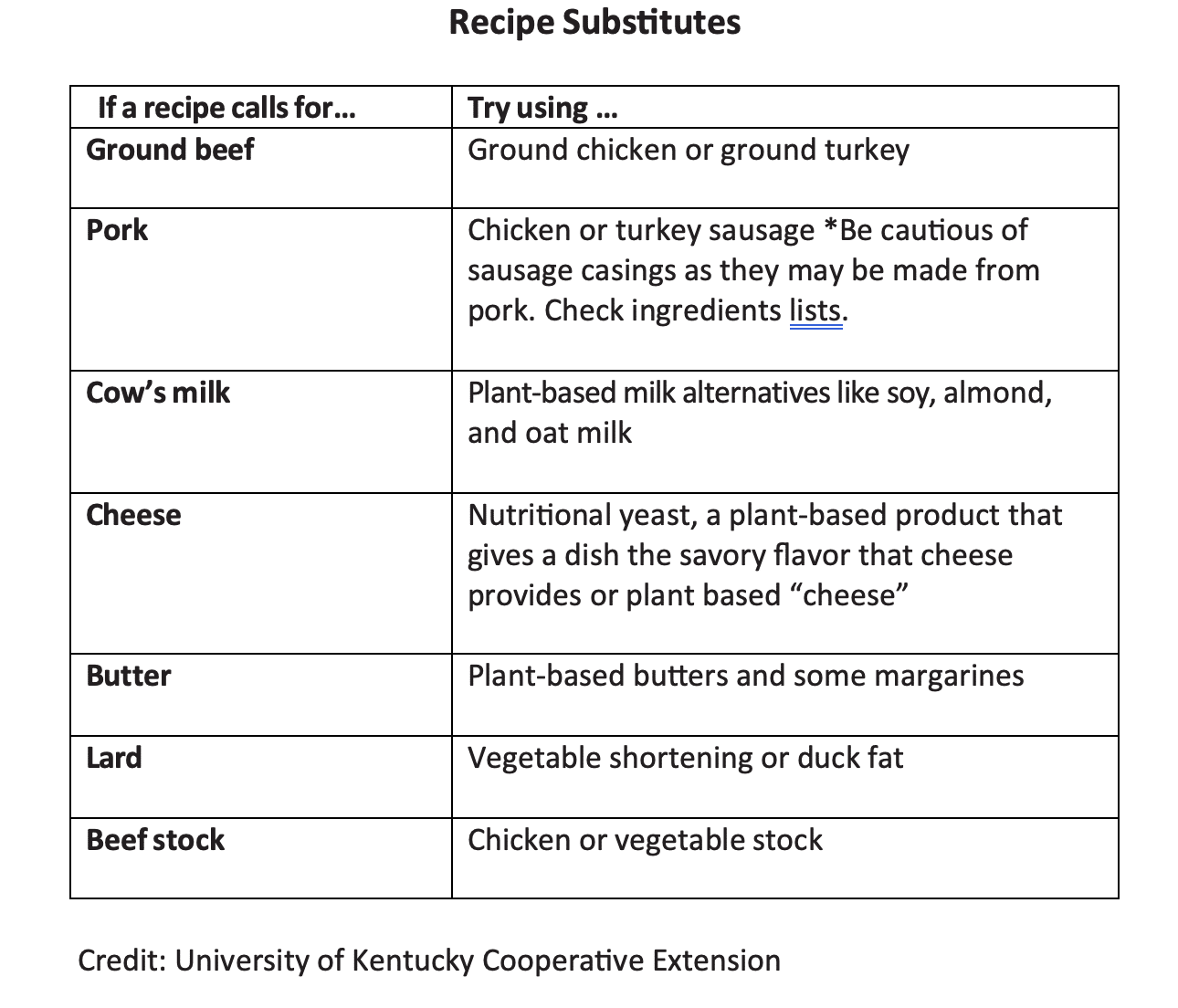
Working with a registered dietitian, learning how to make substitutions, and careful label reading are essential strategies for managing the syndrome. Some individuals may recover over time and resume dairy and red meat in their diet, while others remain allergic long-term. The University of Kentucky Cooperative Extension provides resources, including the recipe substitution chart below and a shopping list of approved food items.
Prevention First
Preventing tick bites is the best defense. Here are a few tips:
- Wear long sleeves and pants outdoors, tuck pant legs into shoes
- Use EPA-approved repellents with DEET or permethrin
- Perform tick checks immediately and again at home
- Shower soon after outdoor activity
Why It Matters
Growing up on farms, ticks were always a “watch out” after being outside, especially with our dogs. But unlike the American dog tick — which can spread Rocky Mountain Spotted Fever — the Lone Star tick carries the added risk of triggering a lifelong red meat allergy. As its range expands, so does concern over Alpha-Gal Syndrome.
For most of us, outdoor work or play is unavoidable. So, play it safe — protect yourself with proper clothing and repellents. It’s the best way to keep both your health and your favorite foods on the plate.
Sources:
Norman-Burgdolf, Heather and Cason, Anna. Dietetics and Human Nutrition. Food Allergens Alpha-Gal. University of Kentucky Cooperative Extension (FCS3-646).
Townsen, Lee, Department of Entomology. The Lone Star Tick in Kentucky. ENTFACT 648. https://entomology.ca.uky.edu/ef648