
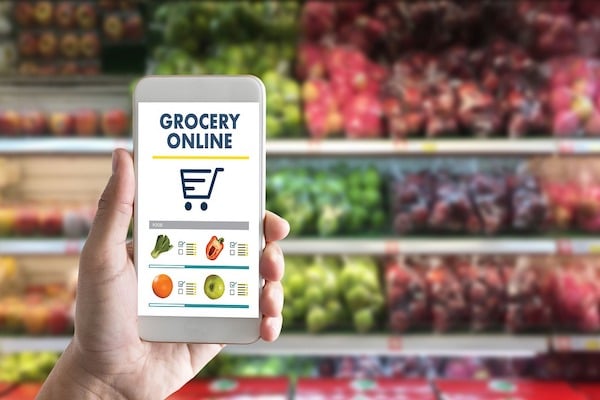
 Grocery stores will always play an important role in our quest for food but during this past year, they became the “center of our universe” whether we shopped online or in person. Grocery stores were our “go to” food source and according to my husband, his social outlet! Grocery retail like other sectors within the food value chain pivoted quickly after the first wave of “Southern snow storm on steroids,” stocked up, and reaped the benefits. According to the U.S. Department of Agriculture, nearly $1 of every $4 that Americans spent on eating out prior to the pandemic shifted to food consumed at home. This meant an estimated $162 billion additional spending in supermarkets. As consumers, our spending ratio at grocery stores moved from 49 cents of our food dollar in early 2020 to approximately 56 cents at year end.1
According to an UBS analyst, overall grocery sale grew 11% last year but are projected to drop 5% in the coming year as vaccinated customers return to restaurants and reliance on supermarkets as the sole source of food declines.2 Leah McGrath, RD, LDN, a corporate dietitian with Ingles Markets concurred: “Yes, I suspect that many retailers will start seeing a move back towards some pre-pandemic numbers and practices, especially when it comes to on-line purchasing and types of products purchased. (I think the days of banana and sourdough bread baking may be over for most!)”
What’s In Our Baskets
As mentioned, during the early days of the pandemic, flour became difficult to find as I can personally attest. For one that traditionally bakes, last spring was one of the few times I couldn’t find flour of any type on my local shelves, but as the supply adjusted to demand, flour returned to its place. In addition, center-of-the-aisle purchases of canned food products increased as consumers stockpiled and unfounded concerns about virus transmittal on fresh produce spread. Frozen food sales in 2020 grew by more than 21% with nearly all categories seeing double-digit sales increases.
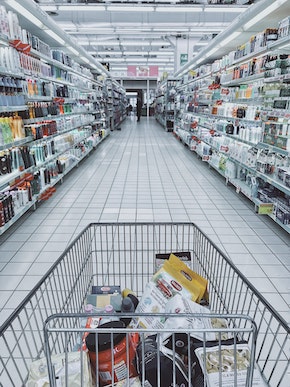 Will the canned and frozen foods remain in favor with consumers? McGrath says, “I’d like to think that many grew to appreciate their utility and shelf stability during the pandemic and will continue to purchase these items to stock their fridge and pantry.” Mindy Hermann, MBA, RDN, with Hermann Communications in New York City stated, “I wonder whether sales of canned and frozen will remain as strong, although high quality culturally diverse frozen meals, which were on the rise pre-COVID, are likely to continue growing.” She also says the early days of hoarding contributed to the increased demand for canned and frozen food. Regardless of the reason for the increased sales in all categories, hopefully, as consumers, we saw the value of having a variety of food products in various forms as ways to increase variety in our diets without food waste. For me, there will always be canned and frozen options in my kitchen (see my blog on this issue). Regardless of the expected decline in grocery store purchases in 2021, or what we buy, how we purchase food will be forever changed.
From Footprint to Fingertip
Online shopping had been gaining momentum over the years, but the pandemic accelerated the growth. According to industry experts, the growth or transition to digital probably was escalated by three years or so.3 For example, Kroger experienced a 116% growth in digital sales in 2020.1 From trend data to personal insights, I can attest that online shopping is here to stay.
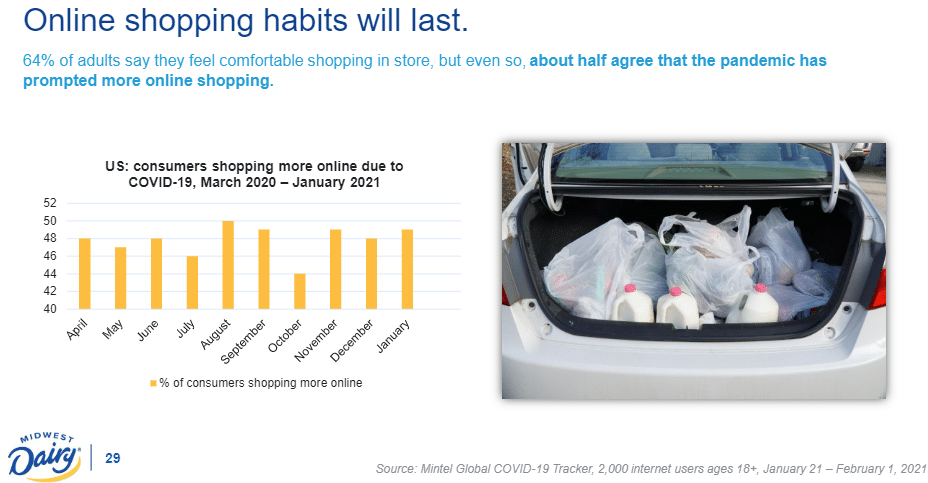
According to Mintel trends shared in a recent Midwest Dairy webinar, 64% of consumers state they feel safe shopping in person but 50% agreed the pandemic had prompted more online shopping. McGrath says she definitely saw the growth in on-line, curbside and home delivery and expects the convenience of these services will not be abandoned completely by customers. She anticipates a “hybrid model” adoption by some where the majority of staples are ordered on line supplemented by in store visits for perishable items. McGrath’s description reflects the shopping “norms” for a couple of my Boomer age friends. Having never shopped online prior to COVID, both stated they would retain their new found habit of splitting shopping between online and in-person with 25-50% done in person for fresh produce, a quick pick up or just to stay informed about new products. But online shopping will continue to play a dominant role. As one friend stated, “I plan better, save money and those impulse buying urges are eliminated” when I shop online.
Planning for the Future
 While expected declines in supermarket revenues may reduce the number of employees for some grocery store chains or smaller venues, many of the national and regional chains see growth in their future as they continue to respond to customers’ needs. With the hybrid shopping model in mind, chains like Hy-Vee are looking to expand with smaller Dollar Fresh stores, which measure around 30,000 square feet and provide a high-quality product assortment — including a full selection of groceries, fresh baked goods, a “value” section and ready-to-eat meals — at low prices in smaller communities.4 Aldi, the chain that builds its growth on this model, recently announced plans to open 100 new stores in 2021 and expand curbside pickup services.5
If the hybrid shopping model continues, the brick-and-mortar grocery store of the future may resemble the smaller model described above. In fact, The Hartman Group, a consumer trends research group, predicated several years ago that the size of supermarkets would decrease as online shopping gained popularly. Little did we know that a pandemic would move our future closer to that reality.
Forever Essential and Grateful
Regardless of store size or organization, gratitude and appreciation go to all personnel along the food value chain this past year. From the grower and processor to the delivery personnel and the in-store employees selecting groceries for online customers or keeping shelves stocked, their commitment kept the “center of our universe” normal … a welcomed relief in a sea of uncertainty.
References:
1. “Kroger ups average pay to $15.50 per hour as digital sales top $10 billion,” by Alexander Coolidge of the Cincinnati Enquirer, USA Today, March 4, 2021.
2. “Grocery stores’ pandemic boom is over,” by Nathaniel Meyersohn, CNN Business, March 5, 2021.
3. “Is there a secret sauce to Kroger’s online success?” by Al McClain, Retail Wire, December 17, 2020.
4. “How Hy-Vee Plans to Grow,” by Bridget Goldschmidt, Progressive Grocer, March 9, 2021.
5. “Aldi to open 100 new stores and expand curbside pickup in the US,” By Ronnie Koenig, Today.com, February 10, 2021.