
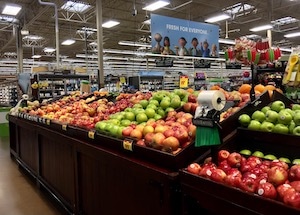
 “Don’t Panic We Have Food” was the headline of my early March 2020 blog as some of us saw empty grocery shelves for the first time. Today, shelves aren’t empty but there may be some gaps. The availability of the endless variety of food and supplies is waning while the quest for goods is increasing. This time, we’re beyond panic … we’re frustrated and our patience is running thin. In our world of fast food, Amazon and DoorDash, we’re accustomed to getting what we want now — not later. Whether we describe our supply chain as “broken” or not, “up righting the ship” during a global pandemic doesn’t happen overnight as one of my food industry colleagues mentioned. As described in a recent syndicated column by Micheline Maynard, “Americans’ expectations for speedy service and easy access to consumer products have been crushed like a Styrofoam container in a trash compactor.”1 Despite this reality, farmers to retailers across the food supply chain are working to close the gaps and ensure basic needs are met. Unless we’re directly involved in the supply chain, as consumers we are the least affected except for possibly having to make substitutions. So, perhaps, it’s time to reset our expectations. Let’s be realistic, resilient and respectful.
Where’s the Food?
From ice cream to apples, food shortages are not the problem. We have food but transporting it from one place to another — within a state, the United States or across the waters — is the issue. Food and supplies that are exported and imported are packed ready to go but as headlines note, sitting in containers outside of ports. One food industry colleague mentioned that shipping apple juice from the state of Washington to Arkansas became a nightmare for the processor as no trucks existed to transport the product. As some may have witnessed, basic goods at U.S. grocery stores are once again showing availability similar to the early COVID months in 2020. With anticipated shortages lasting into 2022, food suppliers are stocking a four-to-six-month supply of items when possible.2
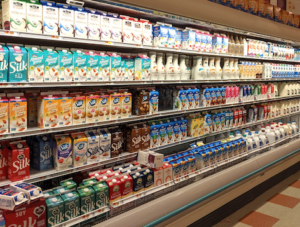 Likewise, the variety availability of items like yogurt or ice cream has decreased, not due to the lack of milk but the lack of labor and containers for the finished product, according to Michael Dykes, CEO of the International Dairy Foods Association. Situations like this touch everyone along the food service chain from restaurants to schools. Donna Martin, EdS, RDN, the Burke County Georgia Director of Nutrition Programs, says, “We are definitely having supply chain issues — no applesauce, trouble with bulk yogurt, paper supplies, parts for equipment, and new equipment like walk in freezers and ovens.” The ripple effect is increasing on a daily basis with a 20% cost increase, she noted.
The Pocketbook Reality
Whether it’s “sticker shock” or the streaming of headlines, prices are going up and not just in the grocery store. A report from CoBank published earlier in October shows that supply disruptions along with labor shortages are adding significant costs to supply chain inputs costing farmers and processors more to produce food.3 While only a small percentage of the supply chain costs have been passed along to customers, it is anticipated that more increases will occur now through the beginning of 2022. With the increase cost of inputs along the supply chain comes higher food prices. Whether its major food companies, like ConAgra and PepsiCo, or local food purveyors, increased prices are inevitable.
 Local meat processor and friend, Jim Gilles III, stated he was having to increase retail prices to offset the price of livestock and the increased cost of processing. Jim says, “I’m trying to hold prices down like everyone but it’s becoming more difficult to feasibly maintain that lower price point.” Jim mentioned the increased costs of animal feed, fuel and fertilizer as well all farming inputs due to the supply chain snafus are major impacts to the bottom line.
The Essential Worker is Essential
In the midst of the pandemic, the recognition of how many hands are required to get food on our table suddenly became a reality. From the produce fields to food processing plants, to front line grocery and restaurant workers, everyone is essential. However, the reality is even more evident today with labor shortages contributing to the mentioned supply chain issues. Why? As one colleague described it, “workers are just tired.” For some, working in the trenches for 25 plus years and maintaining production throughout the pandemic’s challenges, has finally been a reason to call it quits. Additionally, more women have left the workforce due to childcare issues, and replacements are not easy to find. As consumers have returned to restaurants, workers have not always followed suit or quit when the impatient customer outweighs job security.
Time for Reset
Let’s face it — regardless of our age and where we live or work, we have felt the effects of the global pandemic. For some of us it’s been an inconvenience. For others it has meant drastic loss. We want things to be “normal” but whatever “normal” was, it is now gone. Food prices across the globe will increase and with it, more of us will need help while others will only complain. We are not the only generation to feel shortages, nor will we be the last. Some of us remember the gasoline shortages in the 1970s or our parents’ stories about food rationing in the 1940s. Supply chain normalcy is predicted to return over the coming months but our outcome will depend on how we reset our expectations. Opinion pieces are questioning if the real outcome of this pandemic is not the reshaping of the supply chain, but of our attitudes and how we wish to live. Maybe it is time to reset our expectations. Let’s be realistic, resilient and respectful of those around us … especially those who ensure we have food on the table.
References
1. “Don’t rant about short-staffed stores and supply chain woes,” by Micheline Maynard, Washington Post, October 18, 2021.
2. “5@5: Jobless claims hit pandemic low | Plastic industry will pollute more than coal,” New Hope Network, October 21, 2021.
3. “Supply Disruptions Add Costs: Bottlenecks Loom for Critical Ag Supplies,” DTN/The Progressive Farmer, October 11, 2021.